Project overview
Eventbrite
2026
0→1 AI Feature
Conversational AI Systems Design
Professional
Design Lead
Product Strategy
Opportunity
Framing
Experiment Design
Interaction Design
Statsig
Amplitude
FIGMA MCP
Cursor
Claude Code
Skills.md
Natural language, real constraints: designing conversational discovery in a marketplace at scale
The context.
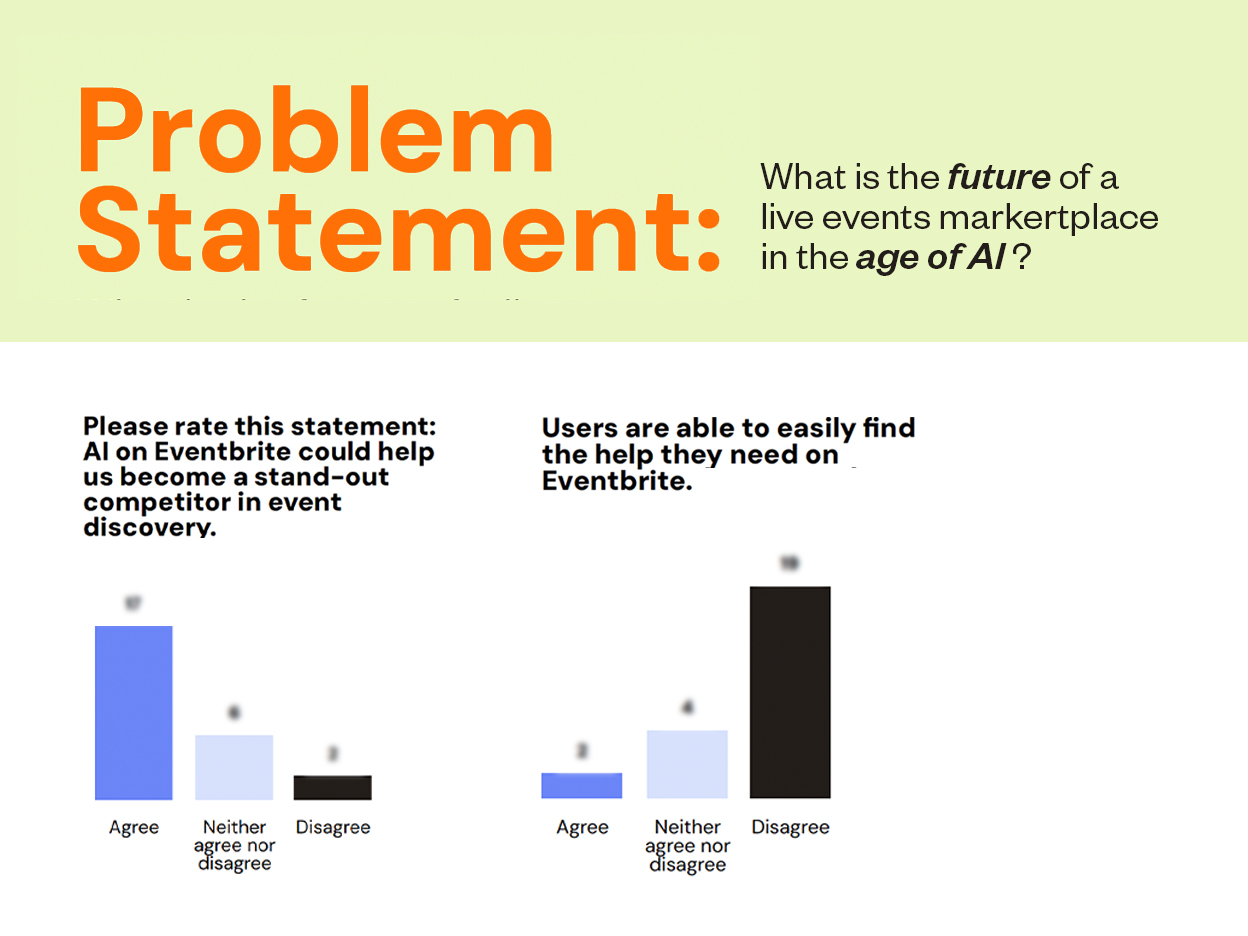
Eventbrite's search was under pressure. Usage was declining on the app, competitors were gaining ground in event discovery. At the same time, AI was reshaping where and how people expected to interact with products — users were increasingly accustomed to describing intent, not translating it into keywords.
The problem.
The stack spanned legacy, fragmented infrastructure — no shared source of truth, and a vendor decision still unresolved mid-design. The design system presented the same kind of tension — initial consensus pointed to existing components, but I argued otherwise.
The goal.
Find out whether natural language search could help Eventbrite reclaim ground in discovery — improving how users express intent, surfacing more relevant results, and driving measurable impact on conversion.
Empathize
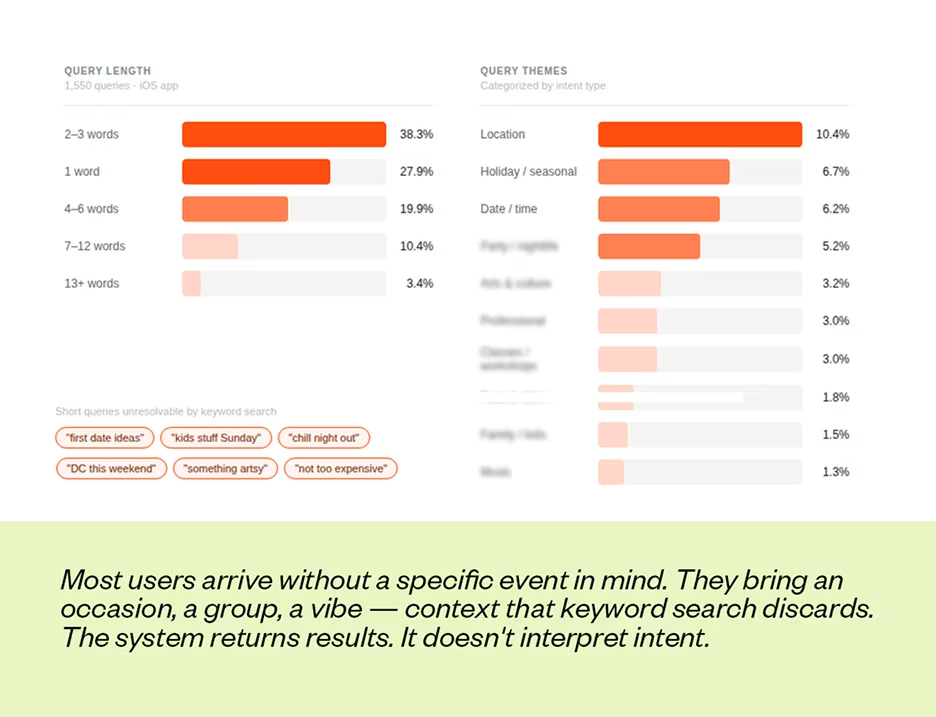
Search expected keywords. Users expressed situations.

Research foundation
Methodology
- Phase 1 — Internal stakeholder interviews (n=10, 30 min each) + Internal Slack survey (n=25)
- Phase 2 — Consumer IDIs (n=6, 30 min each, recruited via dscout)
- Phase 3 — Amplitude iOS query analysis
Objectives
Understand whether users would engage with NL search at all, what they would type when given the opportunity, and what expectations they brought from AI tools they already used in daily life. Identify the gap between Eventbrite's current capabilities and what users and internal teams believed AI should be able to do.
Key insights
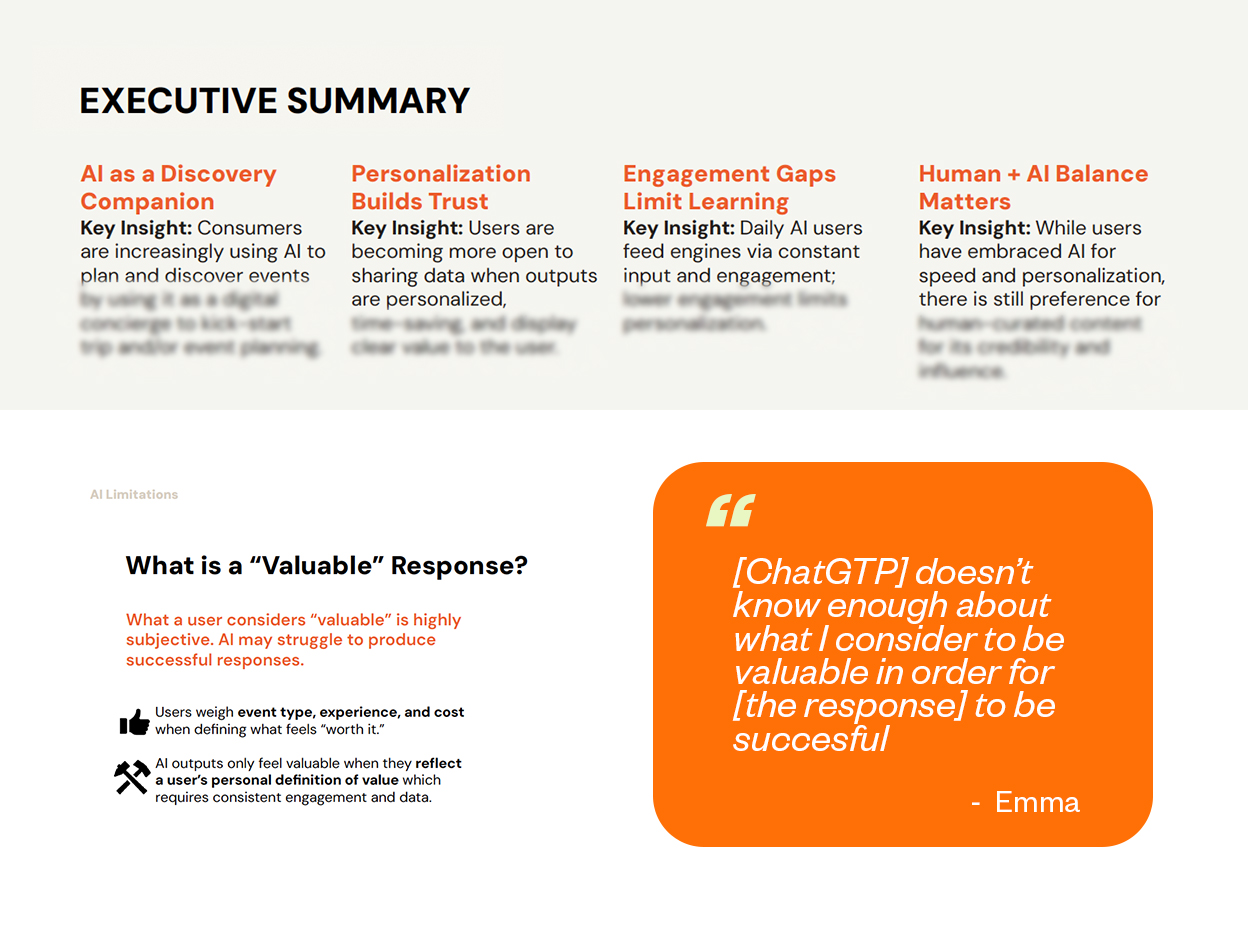
AI expectations are already there
Users were already treating ChatGPT and Copilot as planning concierges. They brought those expectations in app — without the platform having the means to meet them yet.
Infrequent visits are a personalization problem
Eventbrite wasn't a daily-use product. That limited the behavioral data available to personalize meaningfully — AI features had to earn trust faster, with less to work from.
The gap isn’t the UI, it’s the system
Stakeholders agreed AI was imperative for discovery but many did not believe Eventbrite had the technology to deliver it. The design problem wasn't aesthetic but infrastructural.
Ideate & Craft
Designing AI systems, with AI, for the people

Design execution
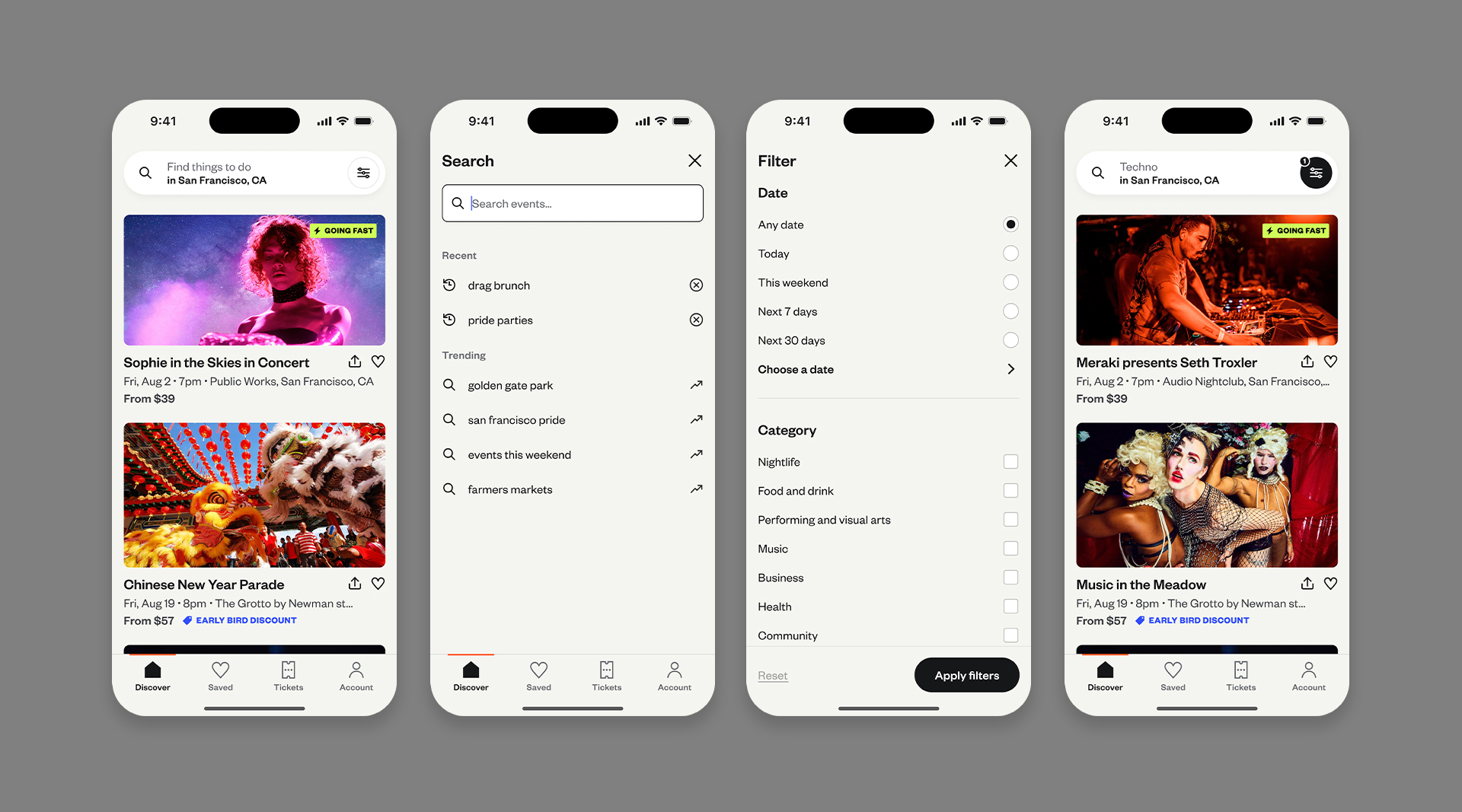
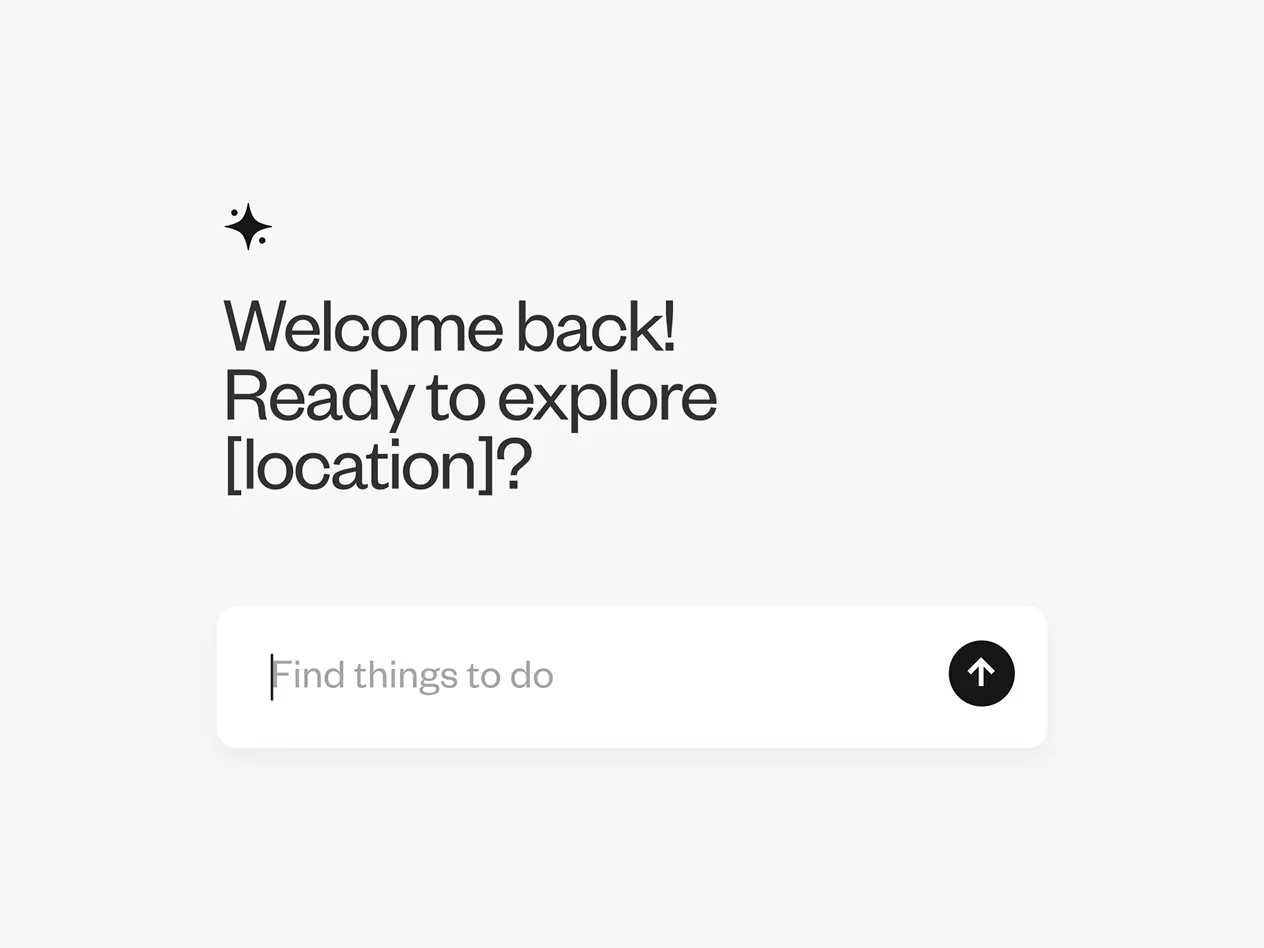
Previous flow — Search & filter
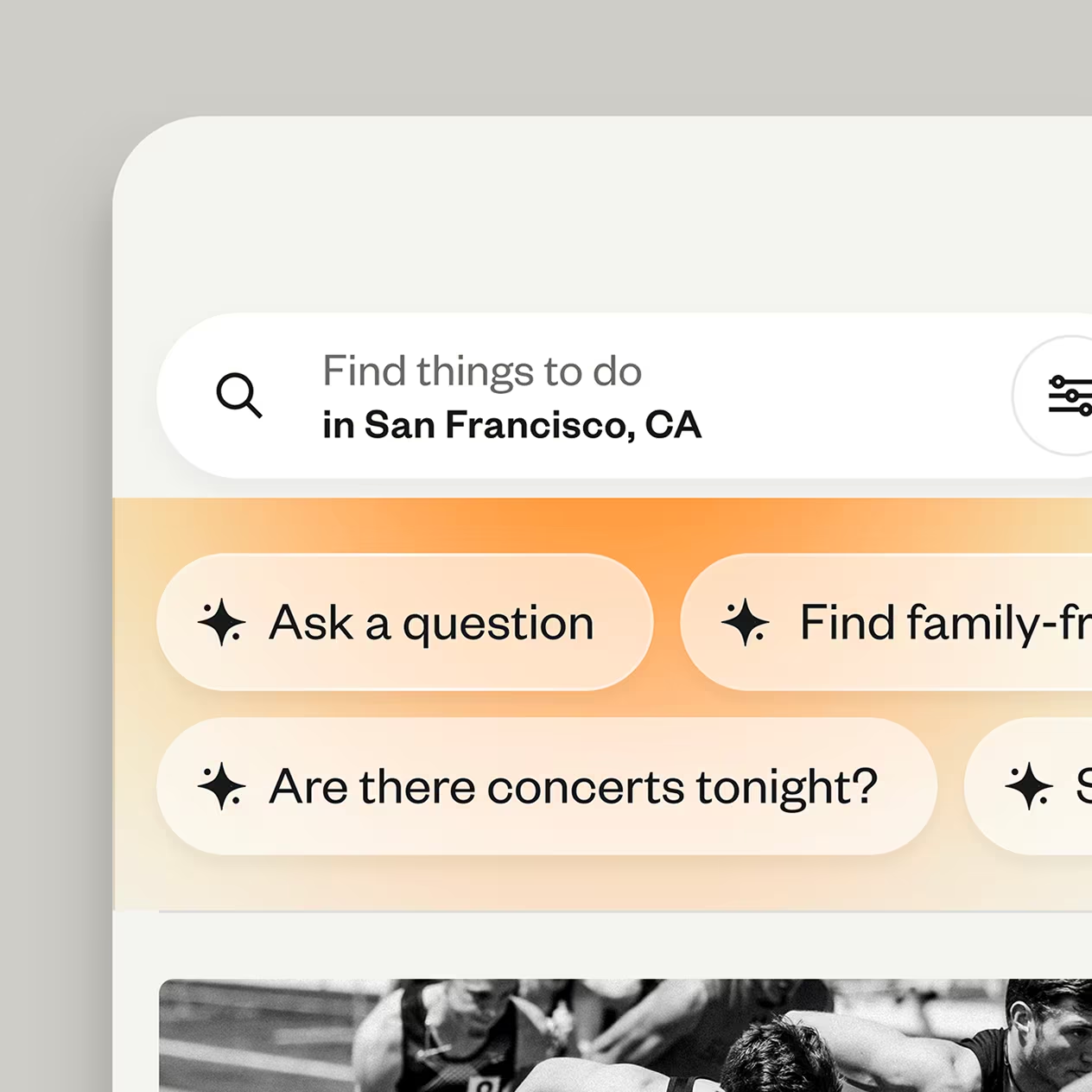
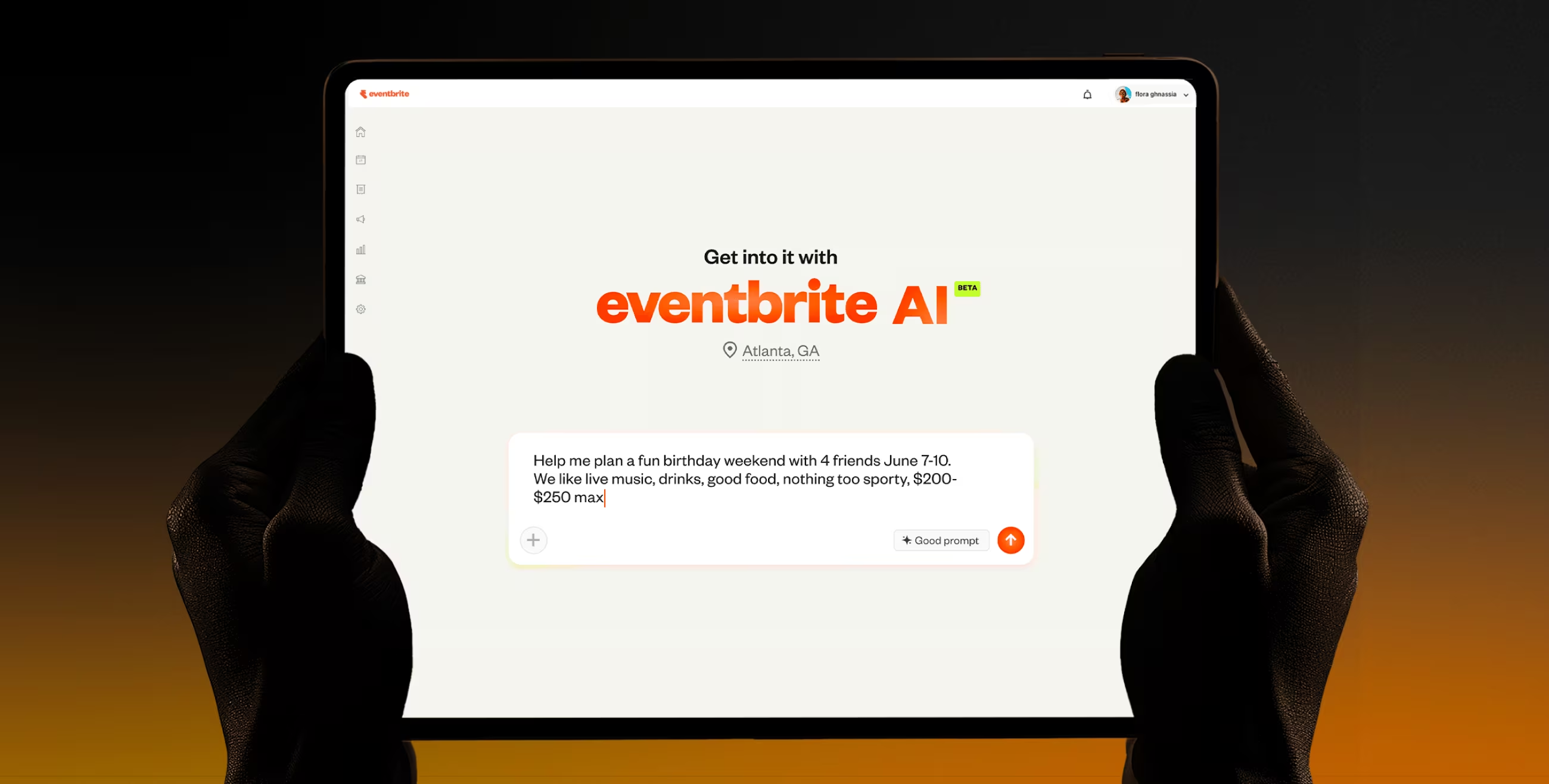
Experiment 1 — Designed to learn, not to launch
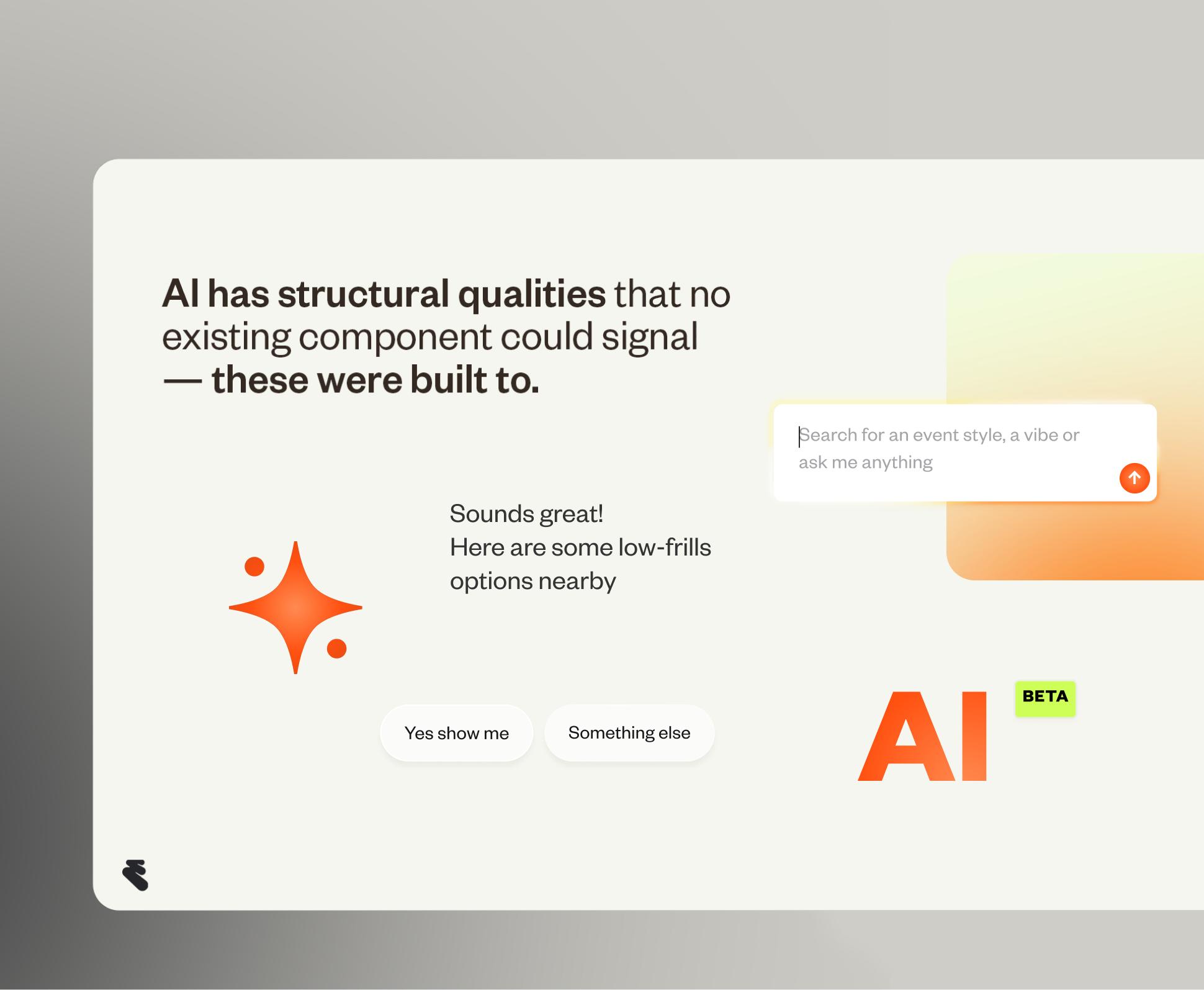
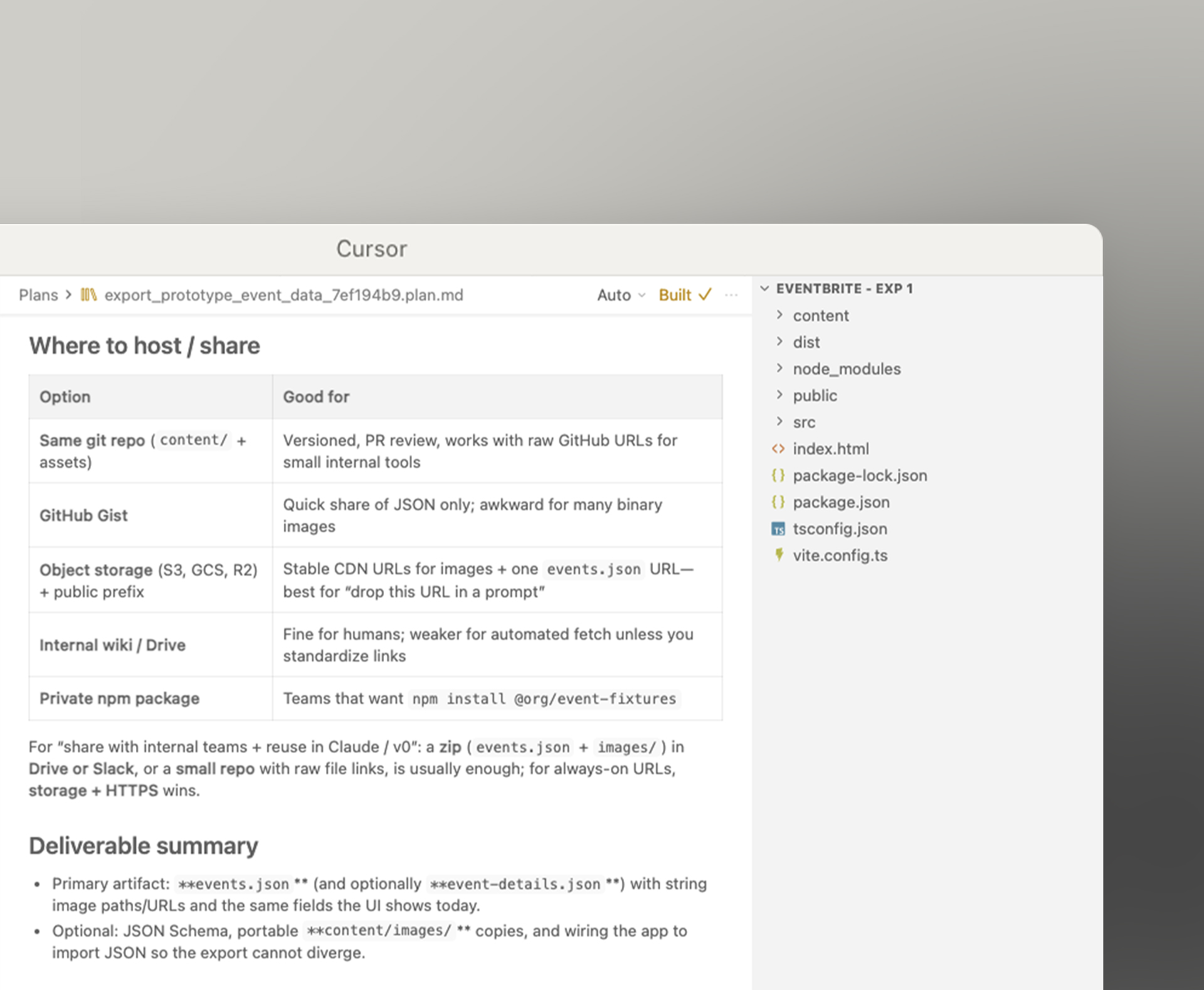
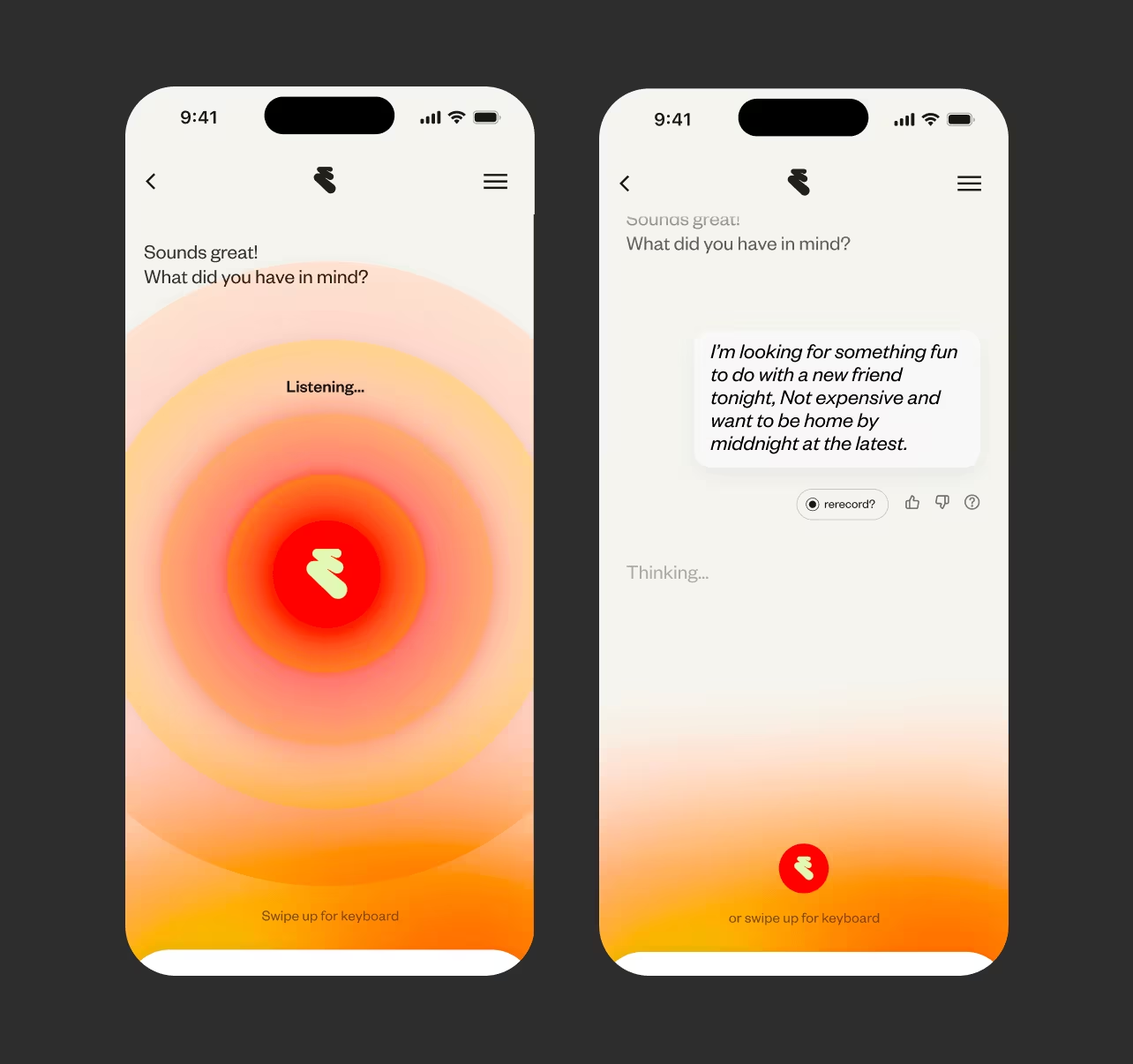
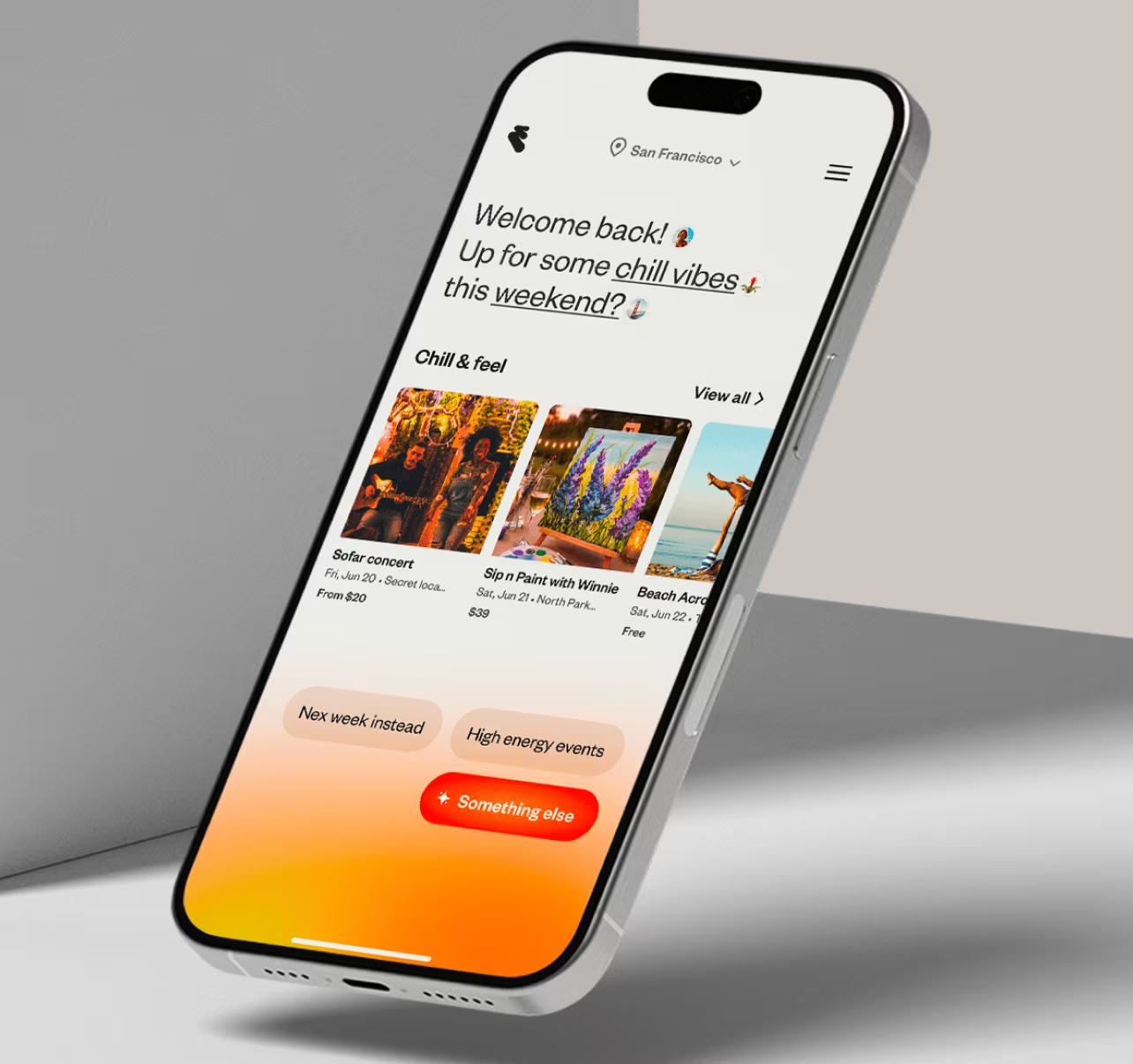
Experiment 2 — “Honey, I’m home”
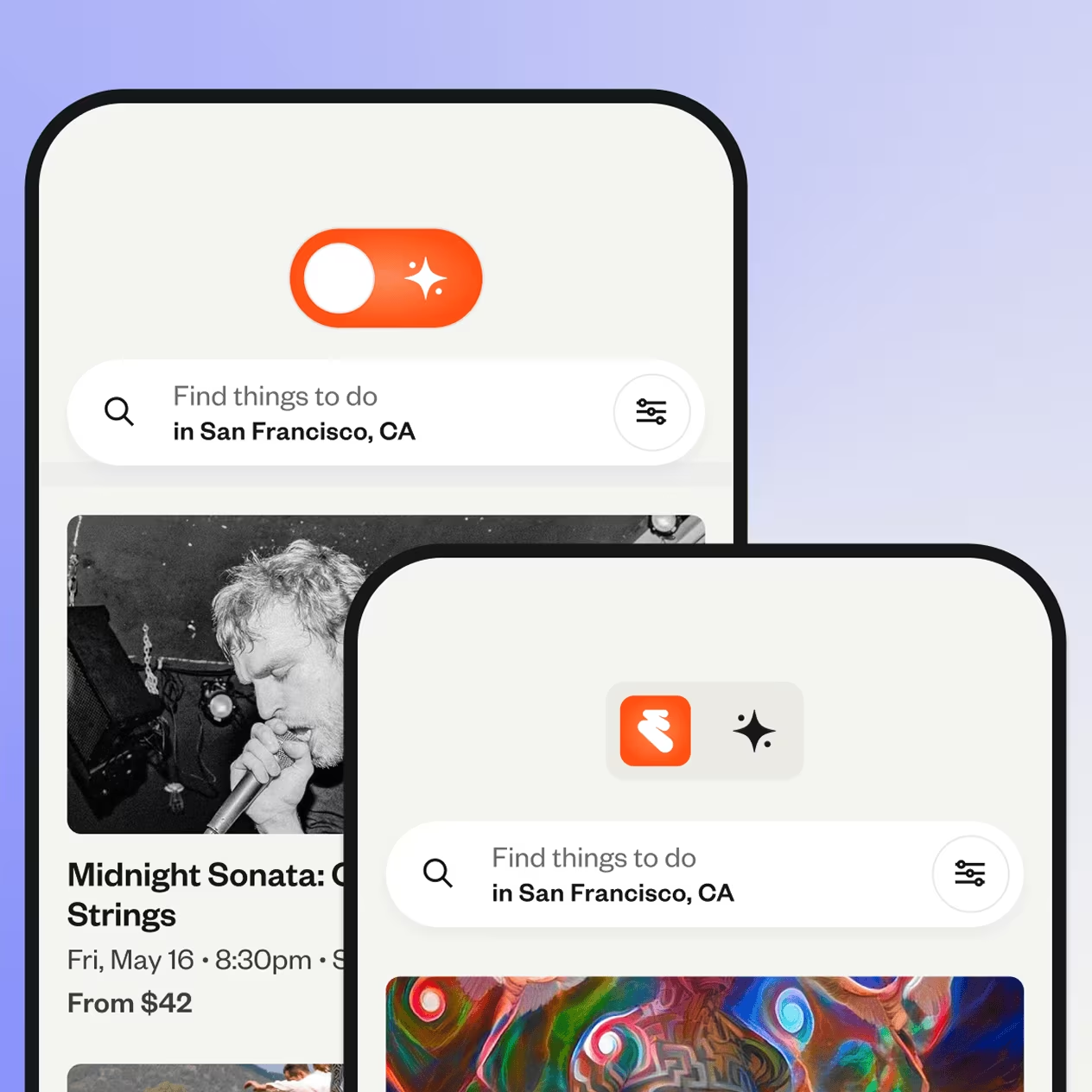
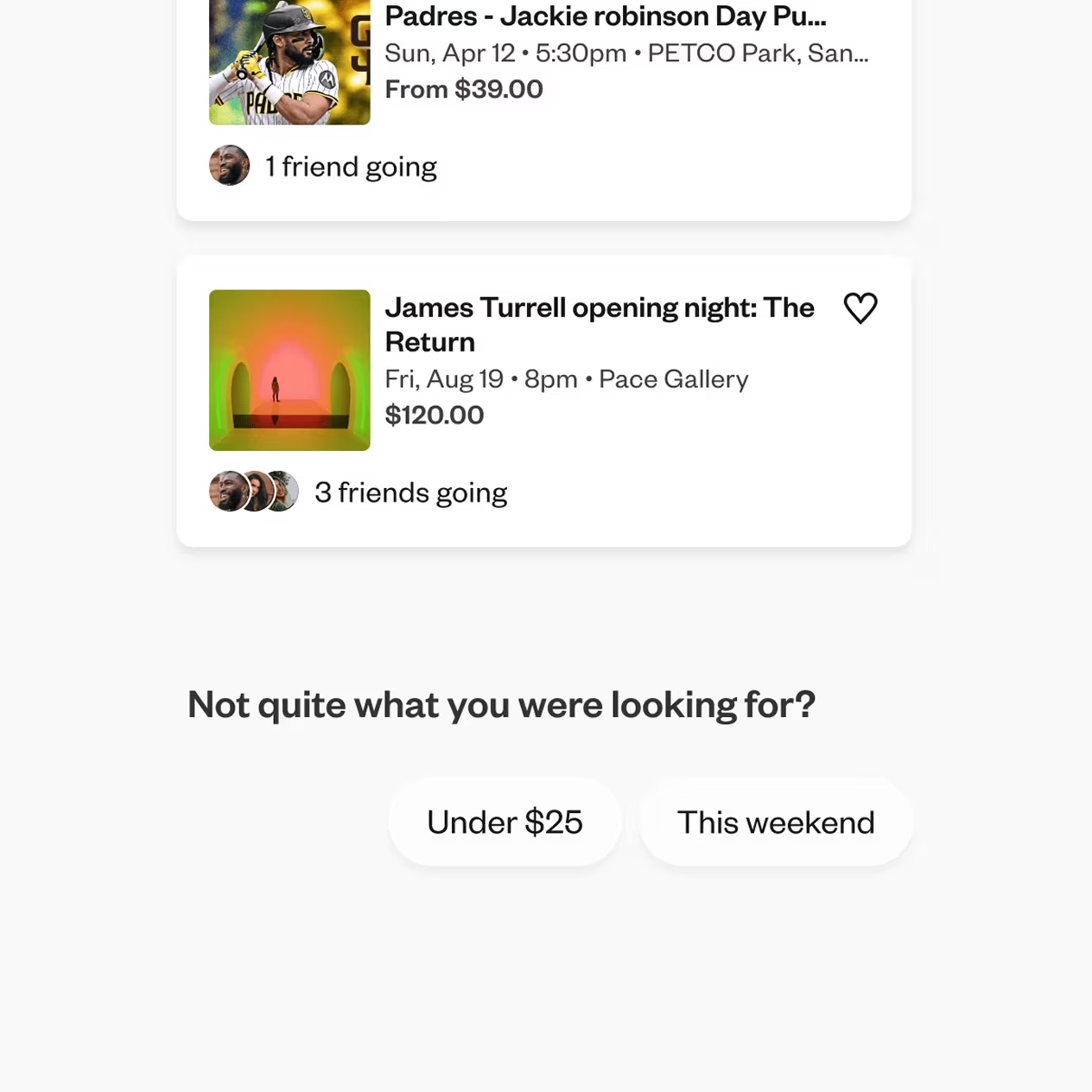
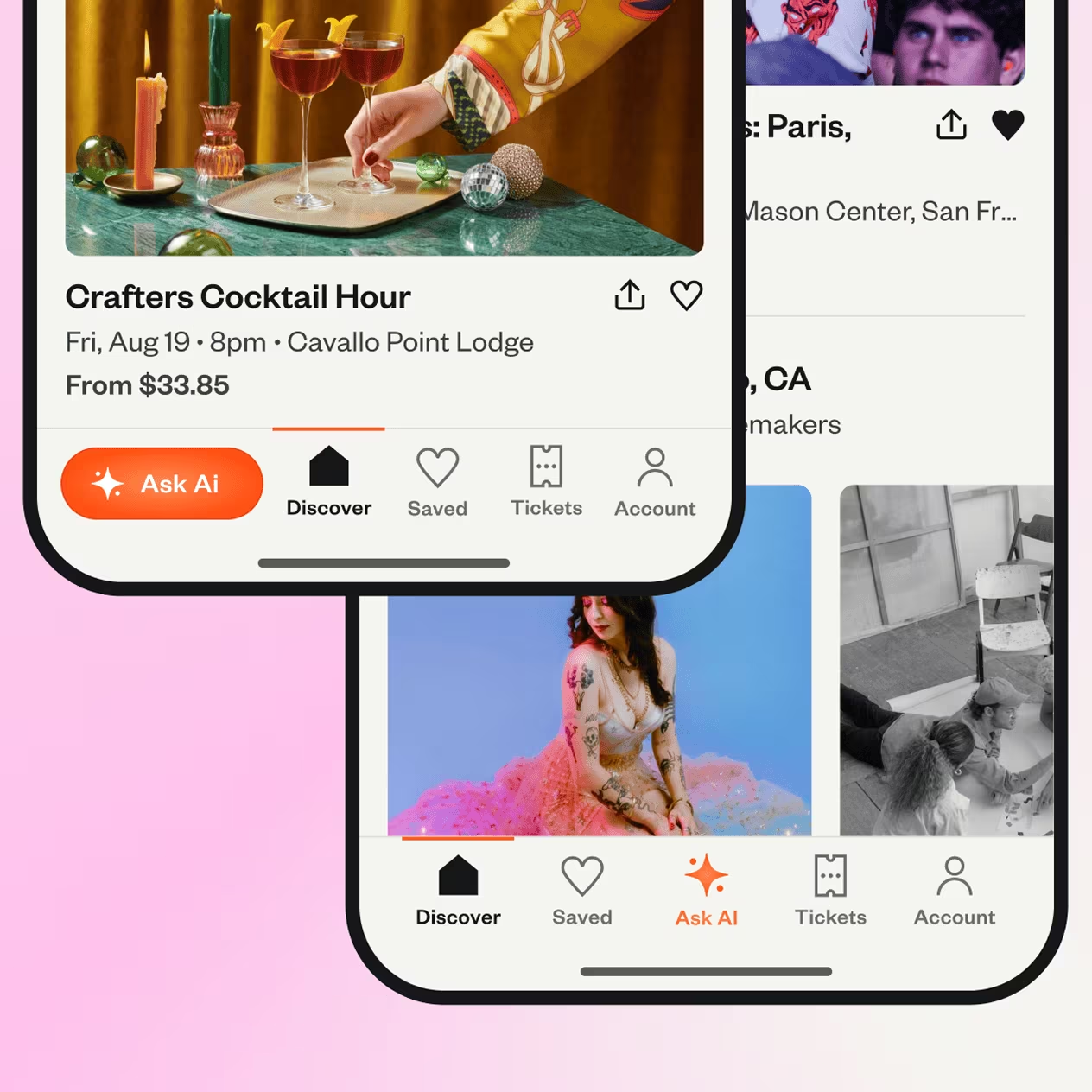
Experiment 3 - A house on pillars

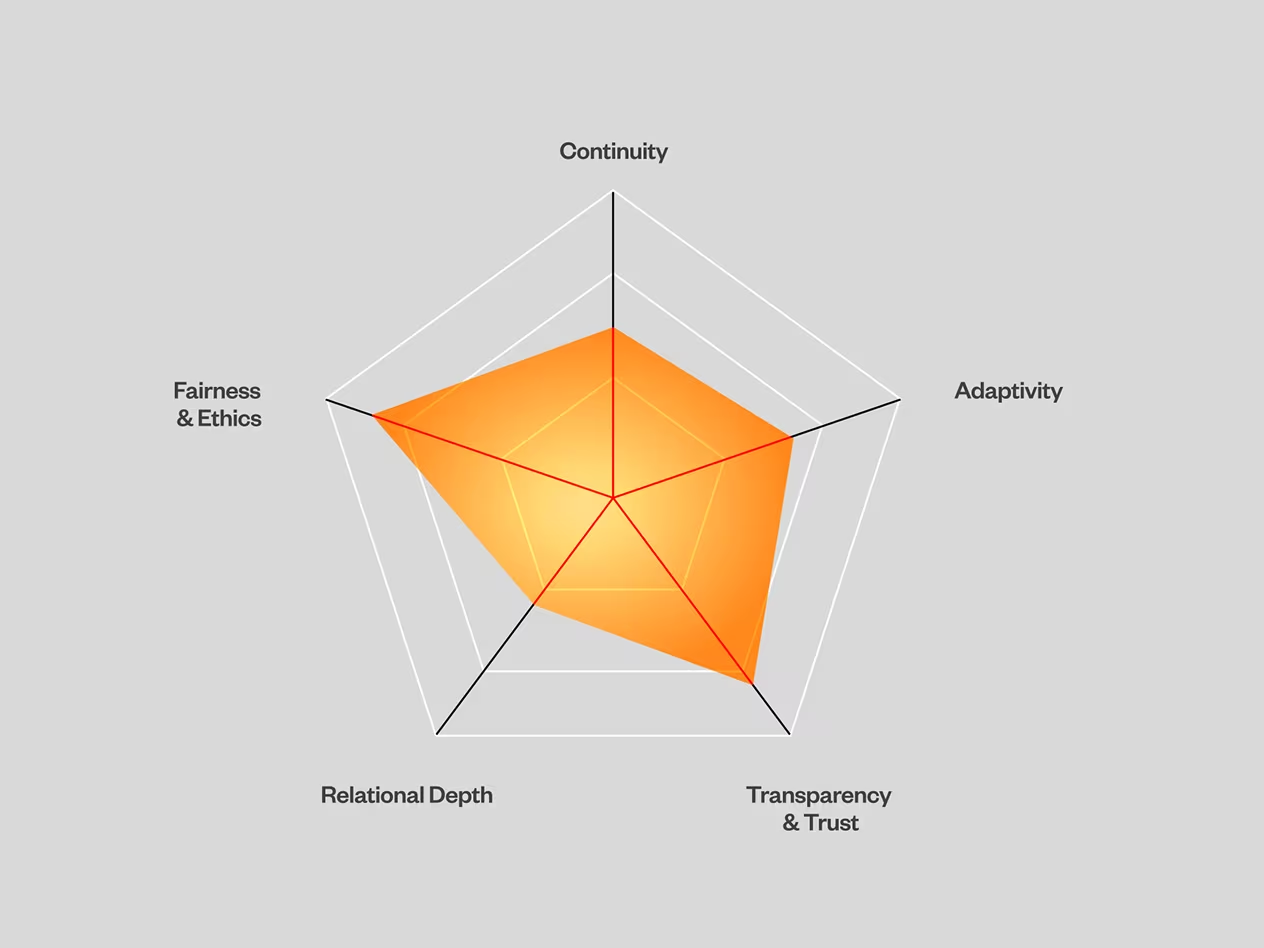
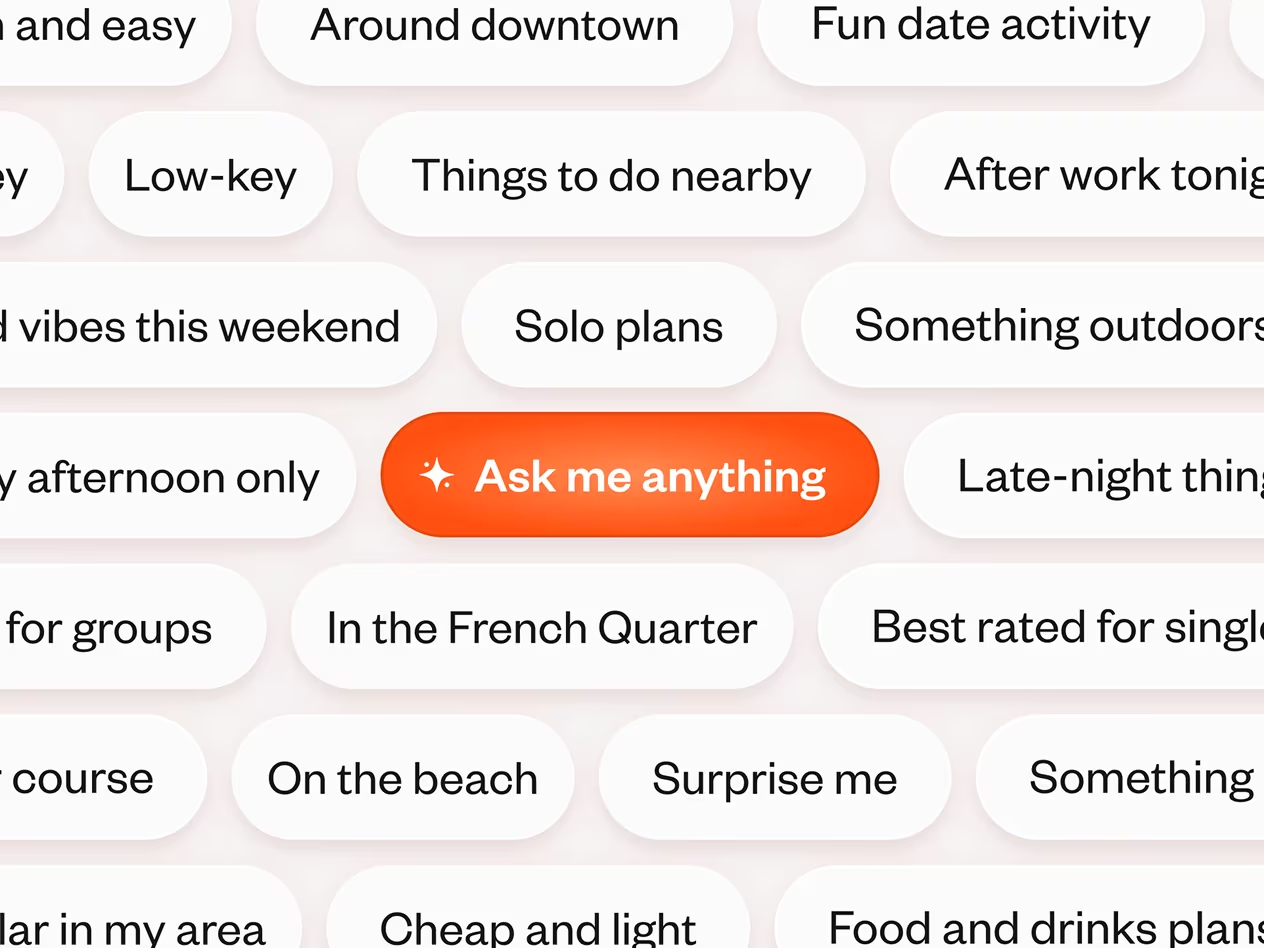
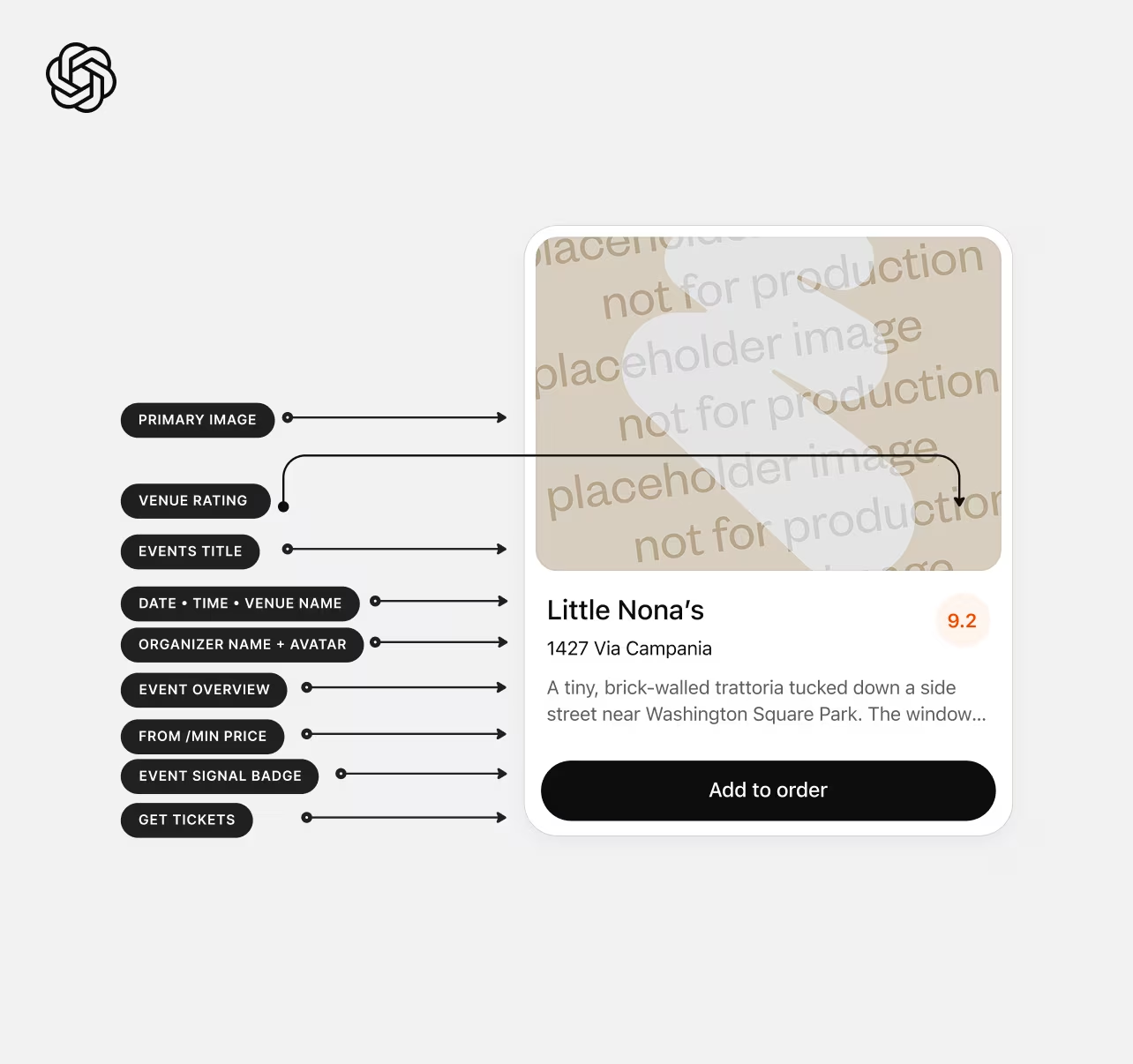
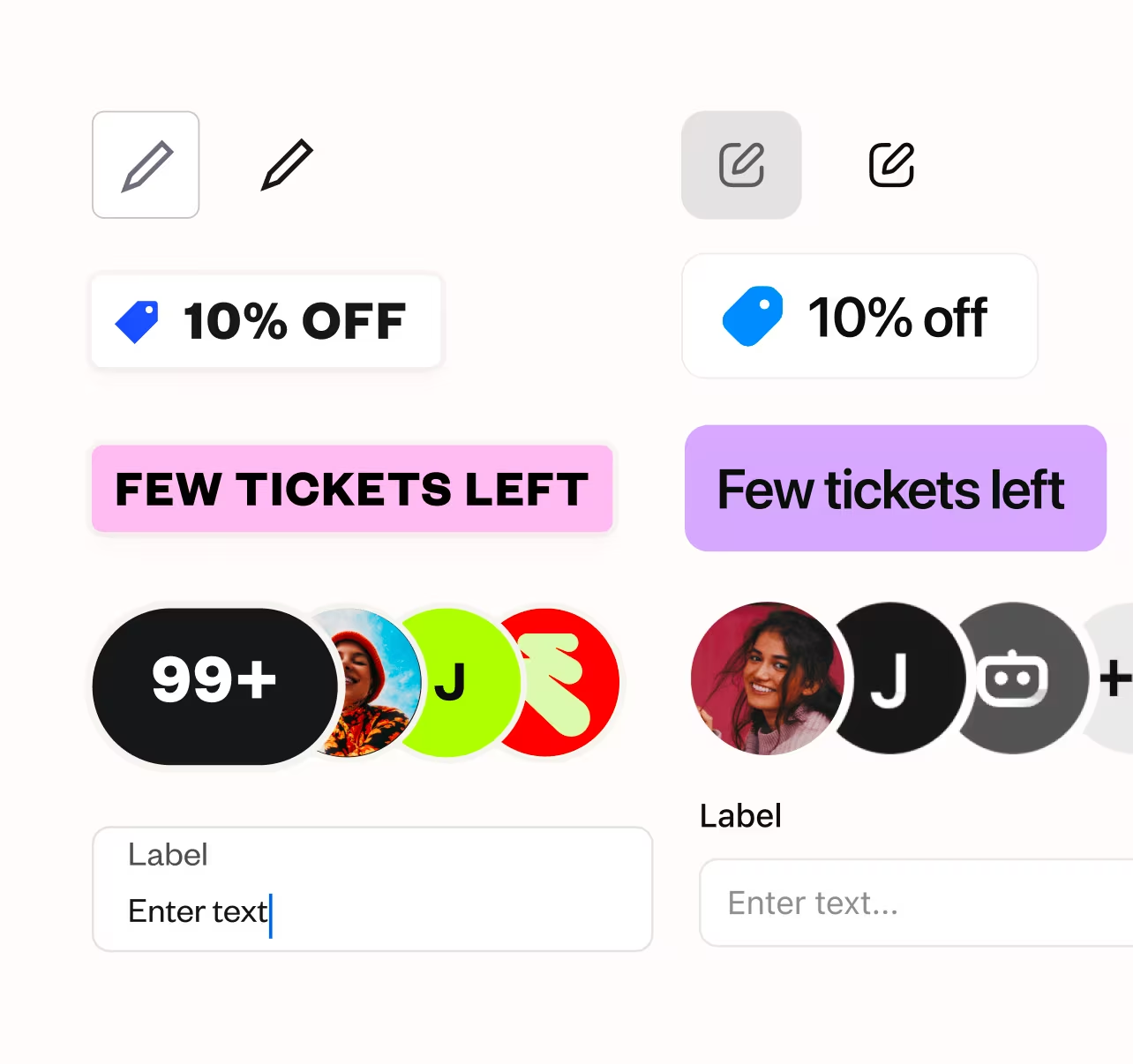
Other deliverables
Outcomes
& reflections

Paid buyers up,
paid orders up
Paid buyers went up +3.78%, paid orders by +3.73%. At Eventbrite's scale, this is meaningful volume — and validated that NL-augmented discovery was worth pursuing.

Context determines
value, not the feature
The design work wasn’t building the feature but figuring out which surfaces and users benefited from it and which didn't. That's a systems problem, not a UI problem.

Backend capability
is a UX problem
Users don't experience a model limitation — they experience a bad interface. In AI products, the model's capability and the design are inseparable.